Inspect custom snapback caps for quality to ensure perfect branding. Talk to our team today! Quality Control for Custom Snapback Caps: Wha...
Inspect custom snapback caps for quality to ensure perfect branding. Talk to our team today!
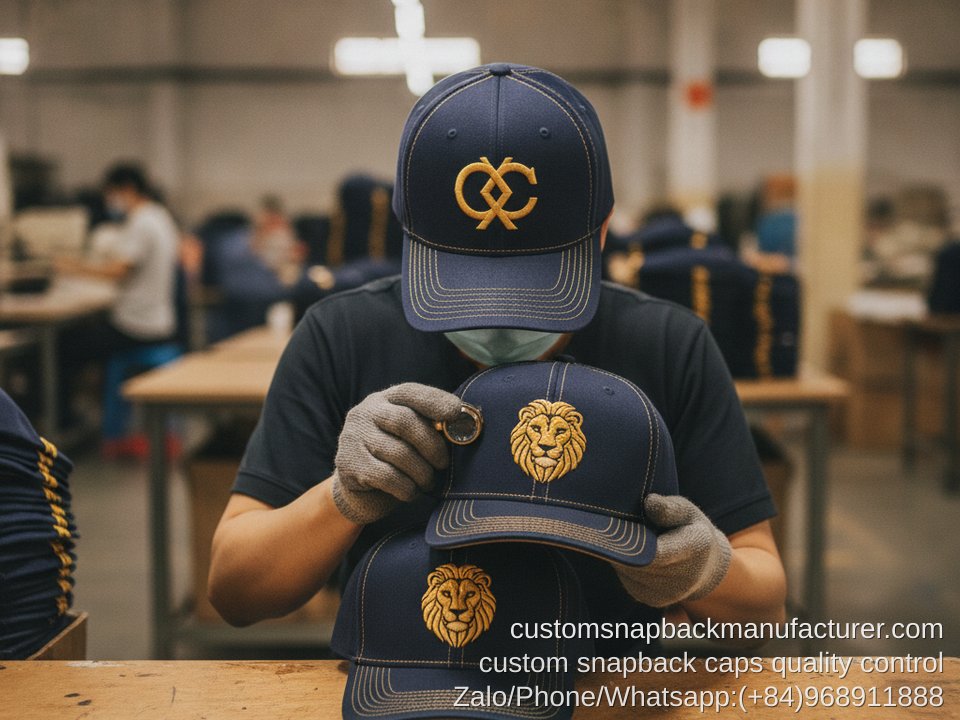
Quality Control for Custom Snapback Caps: What to Inspect Before Accepting Delivery
As a discerning buyer or brand owner, ensuring the consistent quality of your custom snapback caps is paramount. When sourcing from a professional manufacturer, understanding the critical checkpoints for custom snapback caps quality control is your best defense against costly errors and brand damage. This guide will equip you with the essential knowledge to inspect your order effectively before accepting delivery, ensuring every cap meets your exacting standards.
At Custom Snapback Manufacturer, operated by Gold Garment in Ho Chi Minh City, Vietnam, we understand the importance of meticulous quality assurance. Our commitment to excellence is reflected in our rigorous internal processes, but we also empower our clients with the knowledge to perform their own final inspections. This proactive approach guarantees satisfaction and builds lasting partnerships.
This article will delve into the key areas to focus on during your inspection, from material integrity to final finishing. We will cover common defects to watch out for and the importance of adhering to industry-standard headwear quality standards. By familiarizing yourself with these points, you can confidently assess the quality of your custom snapback caps and maintain a low custom snapback caps defect rate.
Understanding the Importance of a Robust Quality Control Process
The journey of a custom snapback cap from design to your doorstep involves multiple stages, each with potential for variation. A well-defined custom snapback caps quality control strategy, both internally at the factory and externally by the buyer, is crucial for mitigating risks. This process isn't just about catching mistakes; it's about ensuring brand consistency, customer satisfaction, and the overall perceived value of your products.
For brands, the quality of their merchandise is a direct reflection of their reputation. A poorly constructed cap can lead to negative reviews, returns, and a decline in customer trust. Therefore, investing time in understanding and implementing thorough quality checks is a strategic imperative. This aligns with the rigorous quality management systems implemented by reputable manufacturers, often guided by principles like the Vietnam factory AQL standards, which aim to minimize the custom snapback caps defect rate.
Our factory, Gold Garment, located at 32 Pho Quang, Ho Chi Minh City, Vietnam, has over a decade of experience in caps manufacturing. We cater to clients worldwide, including the USA, Europe, Australia, and Southeast Asia, offering factory-direct pricing and a low MOQ of 100 pcs per style. This experience has taught us that proactive quality control is the bedrock of successful long-term relationships.
Key Areas for Custom Snapback Caps Quality Control Inspection
When your order arrives, it's time to put your quality control knowledge to the test. A systematic inspection will cover several critical aspects of the cap. Remember, a thorough check at this stage can prevent issues from reaching your end customers.
1. Material and Fabric Integrity
The foundation of any quality cap is its material. Begin by examining the fabric for consistency in color, texture, and weave. Look for any signs of discoloration, fading, or uneven dyeing. The fabric should feel durable and appropriate for the intended use, as detailed in our custom snapback caps fabric guide.
Check for any snags, pulls, or loose threads within the fabric itself. Ensure the material is free from stains or foreign particles that may have been picked up during manufacturing or transit. The overall feel should be smooth and comfortable against the skin, especially for areas like the sweatband.
2. Stitching and Seam Quality
Stitching is a crucial indicator of a cap's construction quality. Inspect all seams, including those on the panels, brim, and internal structure. Stitches should be uniform, straight, and tight, with no skipped stitches, loose ends, or fraying. The density of the stitching should be consistent throughout the cap.
Pay close attention to the brim stitching, as this is often a visible area that contributes to the cap's shape and durability. Uneven or weak stitching here can lead to the brim losing its form over time. Ensure that the thread color matches the fabric or design specifications precisely.
3. Embroidery and Printing Accuracy
For custom-designed caps, the accuracy and quality of logos, artwork, and text are paramount. Examine embroidery for any loose threads, uneven density, or missing stitches. The logo should be sharp, well-defined, and accurately placed according to your design specifications. If there are any color variations in the thread, they should be intentional and part of the design.
Similarly, for printed designs, check for clarity, color vibrancy, and adherence. The print should be smooth, without any cracking, peeling, or smudging. Ensure the print is correctly aligned and sized as per your approved artwork. Any misprints or inaccuracies here can significantly impact brand representation.
4. Brim and Structure
The brim of a snapback cap is a defining feature and needs to maintain its shape. Inspect the brim for flatness and consistency. It should not be warped, bent, or uneven. If the brim has a plastic insert, ensure it is securely encased and not protruding or causing the brim to become rigid or brittle.
The overall structure of the cap should also be assessed. The panels should be well-defined and hold their shape without collapsing. Check the crown for any puckering or distortion. The cap should sit comfortably and symmetrically when placed on a head form or a similar object.
5. Sweatband and Inner Lining
While often overlooked, the sweatband and inner lining contribute significantly to comfort and perceived quality. Inspect the sweatband for secure attachment, even stitching, and comfortable material. It should be free from wrinkles or bunching. Ensure it effectively absorbs moisture and doesn't irritate the skin.
Check the inner lining for any loose threads or rough seams that could cause discomfort. The overall finish inside the cap should be neat and professional. This area is a good indicator of the manufacturer's attention to detail, even in the less visible parts of the product. Understanding the manufacturing process, as detailed in our How Custom Custom Snapback Caps Are Made: Step-by-Step Manufacturing Process, can provide further context.
6. Snap Closure and Fit
The snap closure is a functional element of snapback caps. Test each snap to ensure it fastens securely and is easy to open and close without excessive force. The snaps should be evenly spaced and aligned correctly. Check for any sharp edges or defects on the snaps themselves.
The adjustable nature of the snapback means fit is crucial. While you can't test the fit on every head, you can assess the range of adjustment provided by the snap. Ensure the strap is long enough to accommodate larger head sizes and that the snaps are firmly attached to the strap.
7. Labeling and Tagging
Verify that all internal and external labels, tags, and care instructions are present, correctly placed, and accurately printed. This includes brand labels, size tags, and any custom branding elements you've specified. Ensure the text is legible and the stitching is secure.
Incorrect or missing labels can lead to compliance issues in certain markets. Always cross-reference the labels against your approved samples and specifications. This attention to detail is a hallmark of a reliable custom cap factory Vietnam Gold Garment.
Implementing an AQL (Acceptable Quality Limit) Approach
For larger orders, implementing an AQL (Acceptable Quality Limit) approach is a standard practice in the industry. This statistical method allows you to inspect a representative sample of your order rather than every single unit, making the inspection process more efficient while still providing a high level of confidence in the overall quality.
An AQL plan defines the acceptable number of defects found in a sample before a batch is rejected. The specific AQL level (e.g., 1.0, 2.5, 4.0) is usually agreed upon with your manufacturer based on the criticality of the product and your risk tolerance. Understanding these Vietnam factory AQL standards is key to managing your custom snapback caps quality control effectively.
When conducting an AQL inspection, you'll typically use a sampling plan (like those defined by ISO 2859-1 or MIL-STD-105E) to determine the sample size and the acceptable number of defects. Different defect classifications (critical, major, minor) are assigned different acceptable limits. This systematic approach helps in objectively assessing the custom snapback caps defect rate.
Common Defects to Watch Out For
Being aware of common issues can help you identify potential problems quickly. Here are some frequent defects encountered in custom snapback cap production:
- Color Mismatch: Fabric or thread colors not matching approved swatches.
- Stitching Errors: Loose threads, skipped stitches, uneven stitch density, or broken stitches.
- Logo/Artwork Imperfections: Misprints, smudges, incorrect colors, missing details, or misplaced logos.
- Fabric Flaws: Snags, holes, pilling, or uneven texture.
- Structural Issues: Warped brims, misshapen crowns, or loose components.
- Sizing Inconsistencies: Variations in the cap's overall dimensions or the snapback adjustment range.
- Dirt or Stains: Marks or smudges on the fabric or components.
Identifying these issues during your inspection allows for timely communication with the manufacturer. This proactive feedback loop is essential for maintaining high standards and ensuring future production runs are even better. For brands looking to expand their product lines, partnering with a versatile manufacturer is key, for instance, a private label socks manufacturer might be a good complementary partner.
When to Reject a Batch and How to Communicate
Deciding whether to reject a batch is a critical decision. Generally, if the number of defects found during your inspection exceeds the agreed-upon AQL limits, or if critical defects are present that cannot be easily rectified, rejection may be necessary. Critical defects are those that could cause safety hazards or significantly impact the product's functionality and marketability.
When communicating issues to your manufacturer, be clear, concise, and provide evidence. Document any defects with detailed photos and descriptions. Referencing specific line items from your order specifications or design approvals is crucial. A professional and factual approach ensures your concerns are addressed effectively and efficiently. Remember, our goal is to help you produce the best possible custom snapback caps.
Frequently Asked Questions
Q: What is the standard AQL for custom snapback caps?
A: The most common AQL levels for apparel, including custom snapback caps, are 2.5 for major defects and 4.0 for minor defects. However, this can be negotiated with the manufacturer based on your brand's specific quality requirements and the criticality of the product. Some brands may opt for tighter AQLs like 1.0 or 1.5 for critical or major defects.
Q: How can I ensure color consistency across different production runs?
A: To ensure color consistency, always provide your manufacturer with precise color standards, such as Pantone color codes. Requesting and approving color strike-offs or lab dips before mass production is also essential. Maintaining these approved standards for future orders will help guarantee consistency over time.
Q: What should I do if I find defects after accepting the delivery?
A: If you discover defects after accepting delivery, it's crucial to notify your manufacturer immediately. Provide clear photographic evidence and a detailed description of the issues. While post-acceptance claims can be more challenging, a good manufacturer will work with you to find a resolution, which might include partial refunds, replacements, or credit for future orders, depending on the agreement and the nature of the defects.
Q: How do I choose between OEM and Private Label for my custom snapback caps?
A: The choice between OEM (Original Equipment Manufacturer) and Private Label depends on your brand's goals. OEM involves manufacturing a product based on your unique design and specifications, offering maximum customization. Private Label typically involves taking an existing product design from the manufacturer and branding it with your logo. Our guide on OEM vs Private Label Custom Snapback Caps Manufacturing can help you decide which model fits your brand.
By implementing these quality control checks, you can significantly enhance the likelihood of receiving custom snapback caps that meet your expectations and delight your customers. Partnering with a reputable manufacturer like Gold Garment ensures that quality is a priority from the initial design to the final product.
📩 Request a Free Quote — Response Within 5 Minutes
🌎 Website: customsnapbackmanufacturer.com
Factory-direct pricing · MOQ from 100 pcs/style · Sample development · Worldwide shipping


